Rbean
Re-engaging students on a platform they weren't using fully
YEAR
2022
TIMELINE
3 months
ROLE
End-to-end design lead, working with Product and Engineering.
SUMMARY
Rbean is an EdTech startup building a student-centered learning platform for career changers and lifelong learners
Brought in as a contracted UX designer, I audited the student interface to understand why learners weren't engaging with key features and redesigned the experience to fix it. The project spanned research, diagnosis, information architecture and prototype testing, resulting in a platform that gave students a clearer sense of where they were, where they were going, and how ready they were for the job market.
IMPACT
Students knew where they were going
Clarity
100% of users understood the platform navigation without guidance
The redesigned sidebar made key features immediately findable, no more discovering they existed months into the course.
Confidence
88% of users valued setting a professional goal
Knowing what skills a future employer would look for gave students a clearer sense of direction and purpose during their course.
Engagement
Community redesigned after round one of testing
The first iteration didn't land but it was redesigned with a focus on content before the second round, which validated the approach.
THE PROBLEM
Students were using only a fraction of a platform built to support them
Rbean had invested heavily in features designed to help learners track progress and collaborate with peers. But most students didn't know those features existed, and the ones who did couldn't find them easily.
The result was learners who felt uncertain about their progress, unprepared for what came after their course, and disconnected from a community that could have supported them.
THE RESEARCH
Before designing anything, I needed to understand what students were actually experiencing day to day
2 week diary study with students to understand their daily learning experience: what motivated them, what frustrated them, and what a typical day on the platform looked like. This was followed by 1:1 interviews split into two parts: understanding their background and frustrations, then observing how they actually used Rbean.
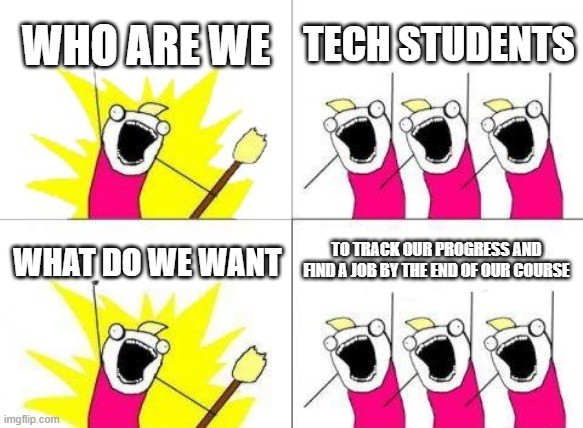
Ideation workshop with users to validate potential directions before moving into design. This confirmed two things: students responded positively to rewards and progress tracking, and they wanted a clearer connection between their course and the job market.
WHAT WE FOUND
Three things were getting in the way of students feeling confident and prepared
👎🏻
Invisible features
Rbean already had skill levels, achievements and a community feature. Most students had never seen them, not because they weren't interested, but because nothing on the platform directed them there. What existed wasn't discoverable.
👎🏻
No sense of progress
Students had no way to see where they were in their course at a glance. Without that, it was hard to feel momentum or to know what to focus on next.
👎🏻
No connection to the job market
Career changers needed to know their course was preparing them for something real. Without a clear link between the skills they were building and what employers actually looked for, many felt uncertain about whether the course would get them where they wanted to go.
THE SOLUTION
Three problems, three solutions all connected by a redesigned information architecture
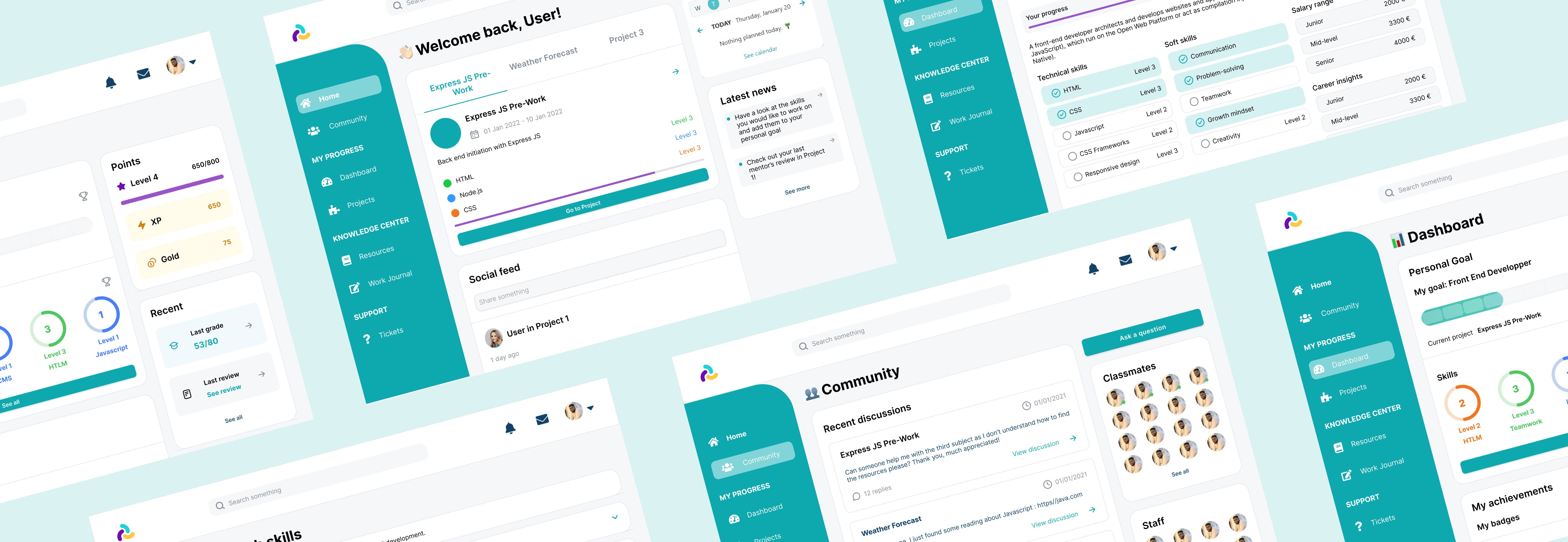
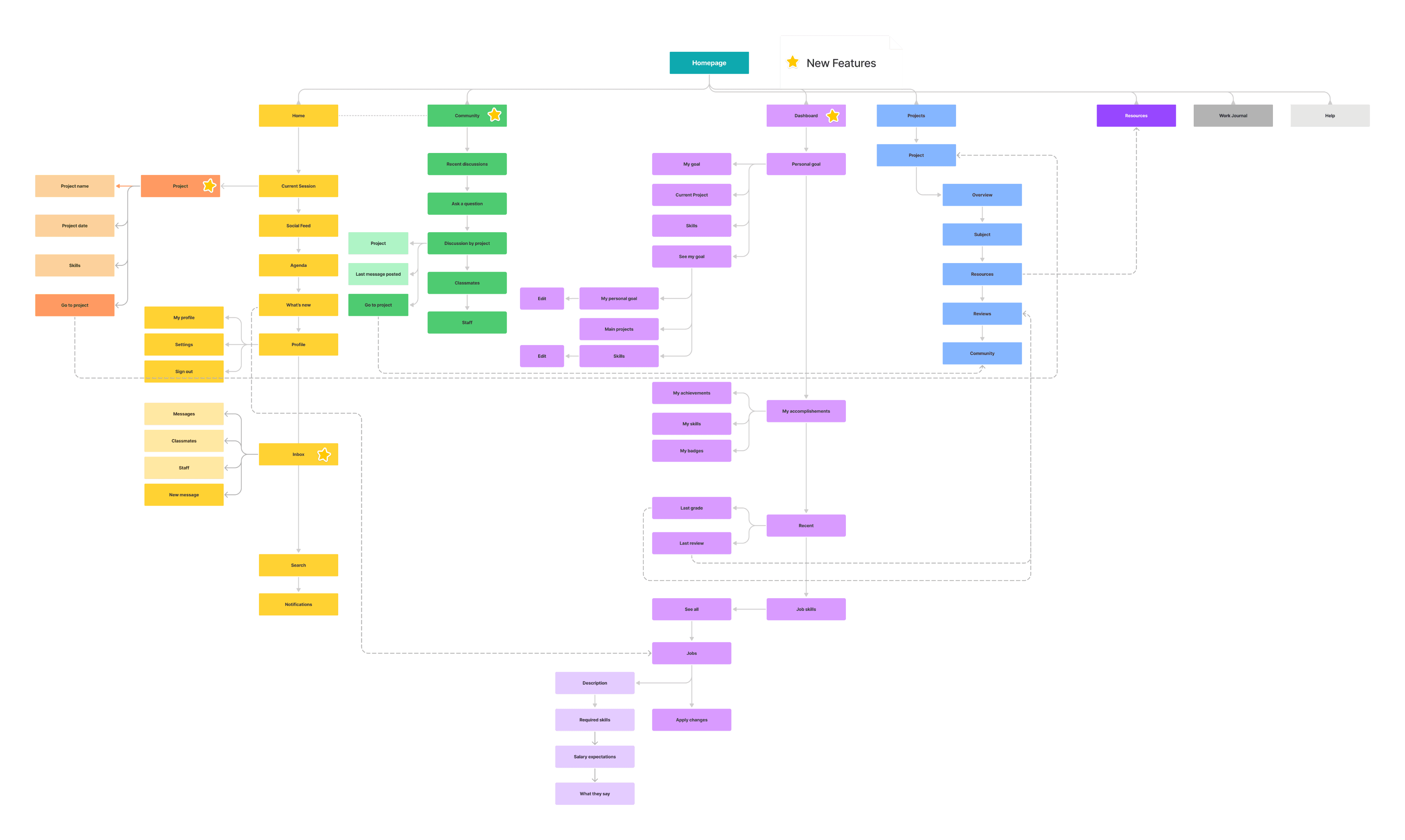
Before designing any new screens, I restructured the platform's navigation to make existing features findable and new ones feel natural. Two features were added to the sidebar: Community and Dashboard, while a new Inbox was introduced from the homepage.
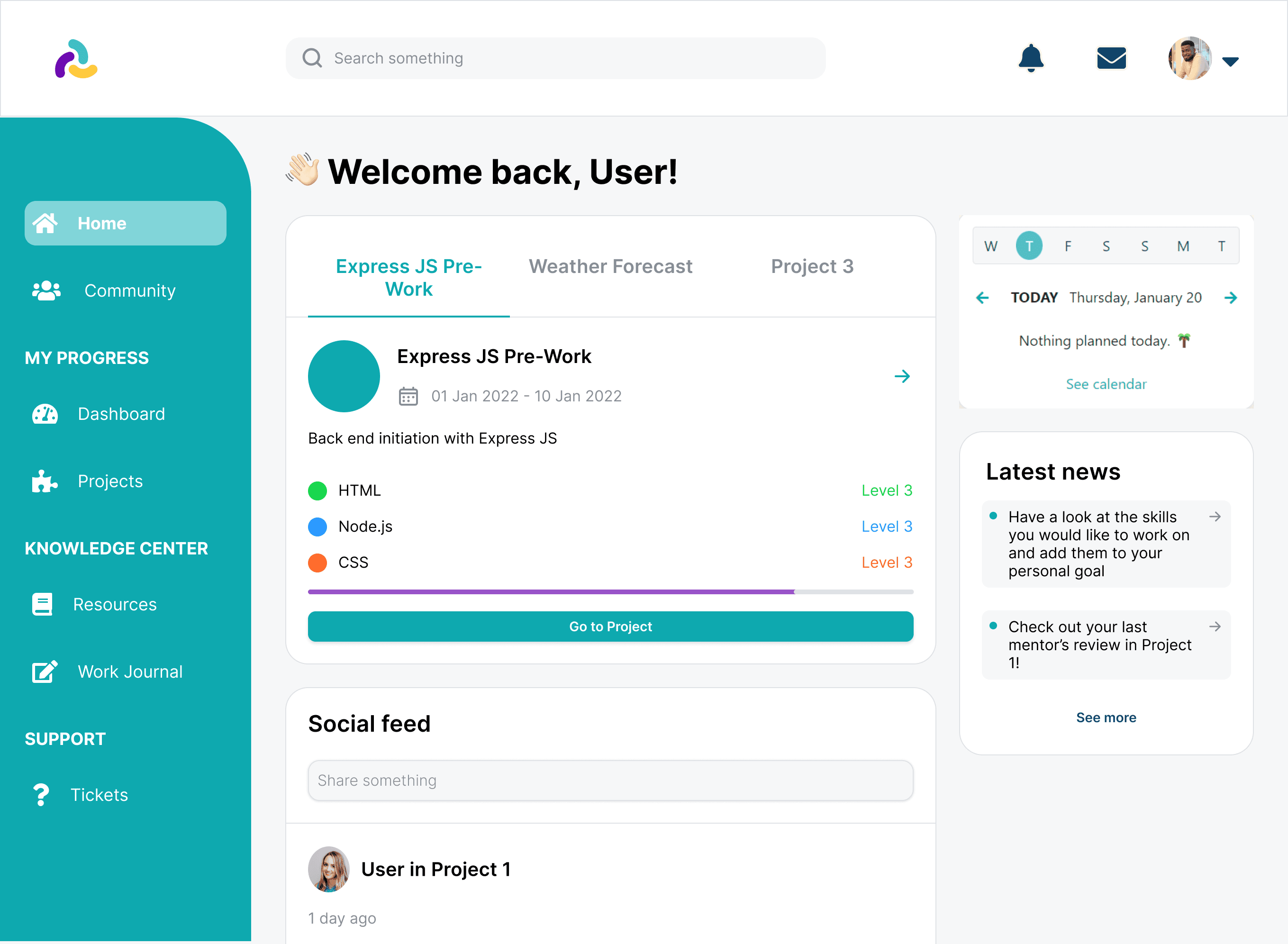
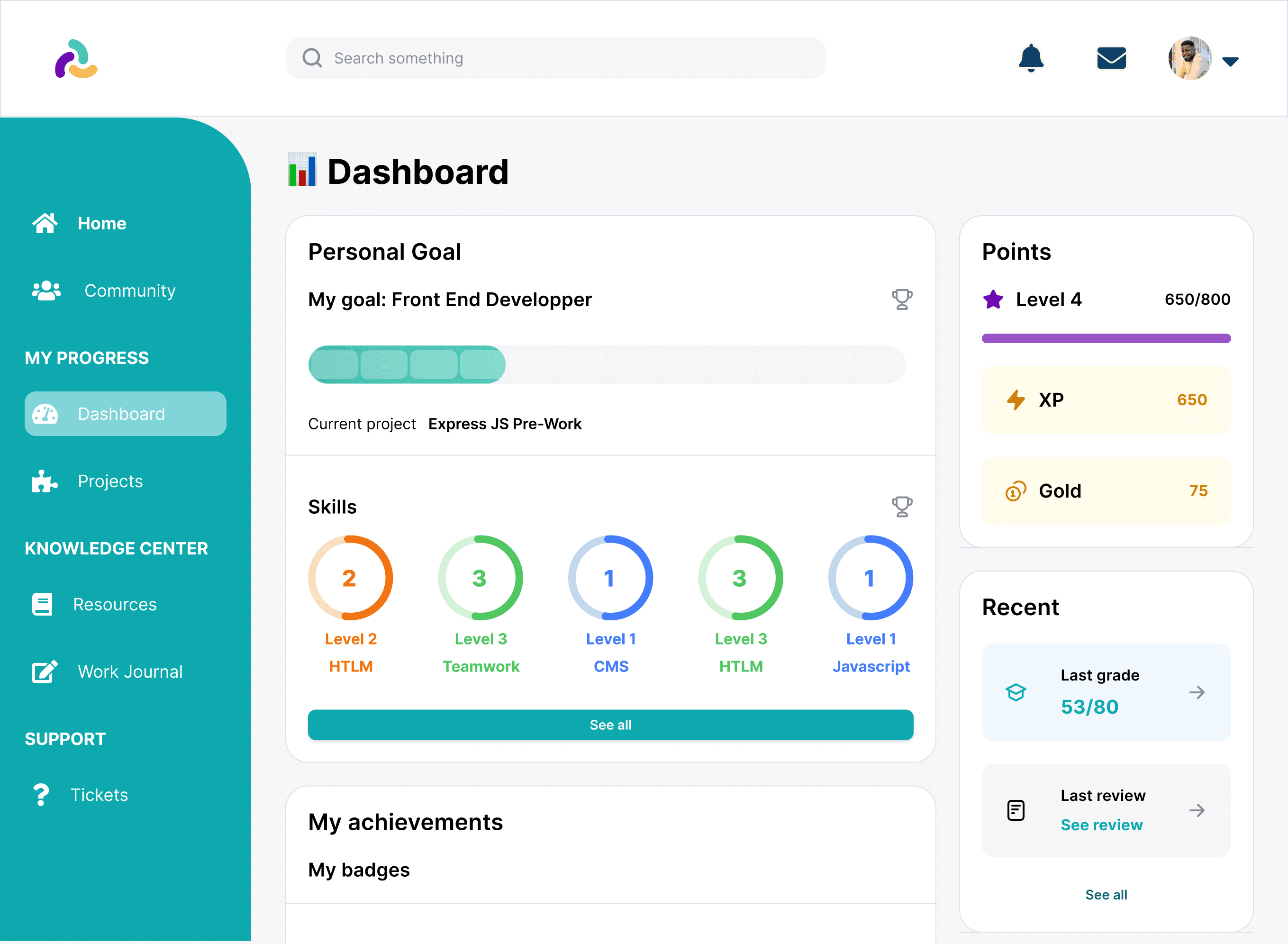
Homepage The redesigned homepage gave students an immediate view of their current project, the skills they were working on, and their progress at a glance. An action section surfaced anything that needed attention, no more hunting around for what to do next.
Dashboard Rbean already had achievements, skill levels and competencies but they were buried and most students had never found them. The dashboard brought everything together in one place, accessible from the sidebar, with the ability to dive deeper into each category.
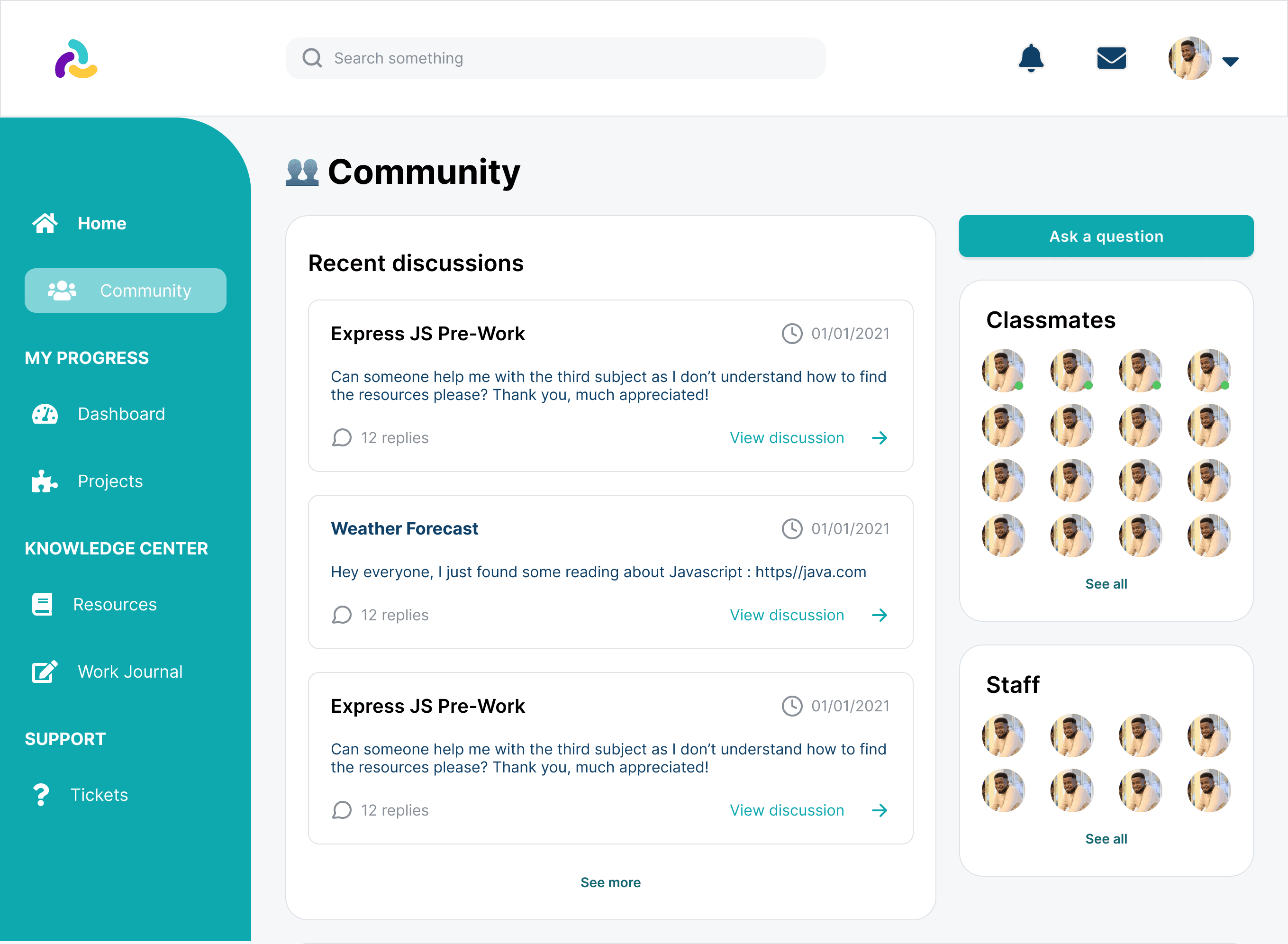
Community Previously hidden inside individual projects, Community was added to the sidebar so students could see the latest posts and activity without having to know where to look first.
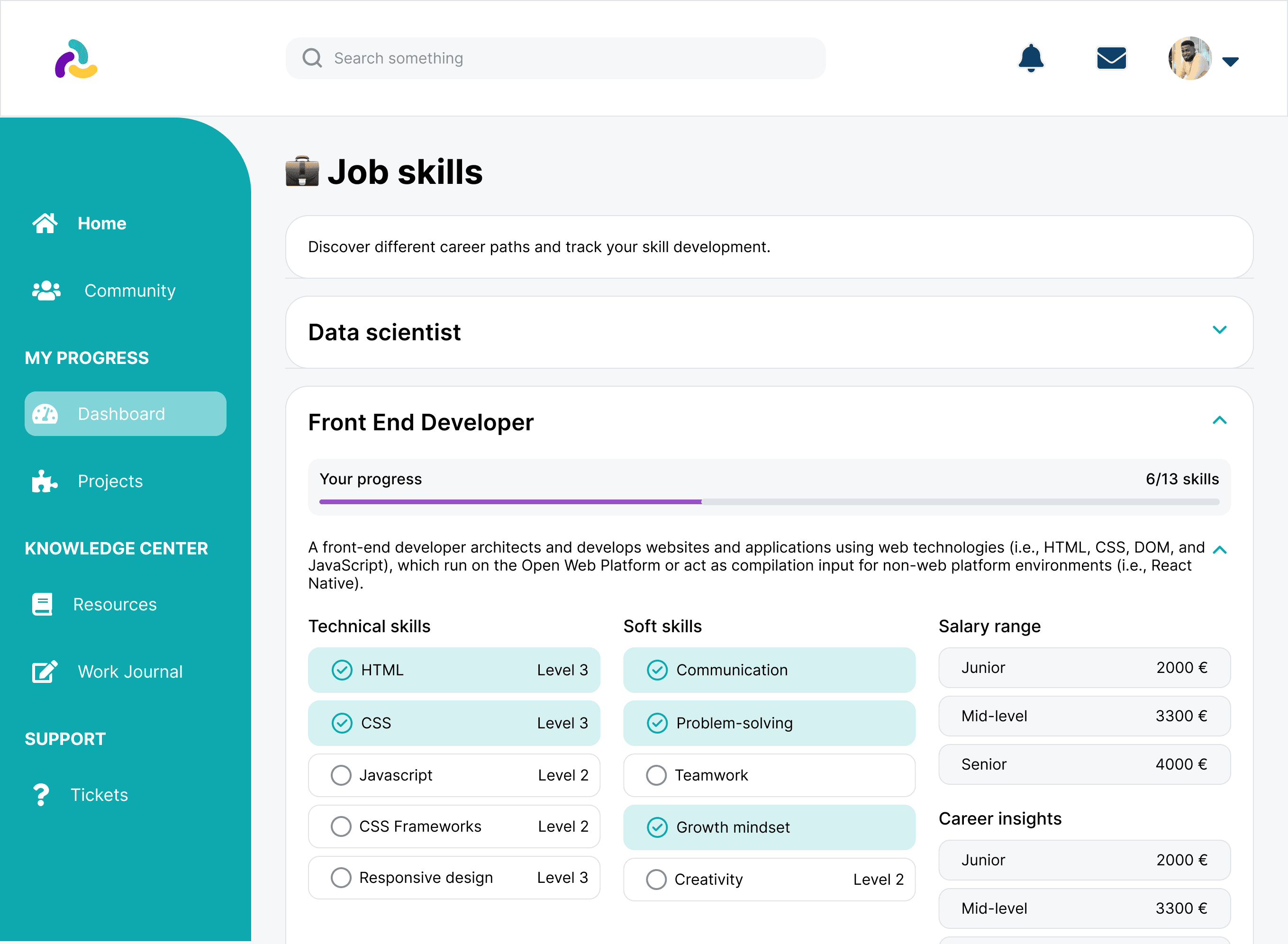
Personal Goal Students could browse potential job paths, see the skills required, read salary expectations and hear from people already doing the role. From there they could set a personal goal and track the projects and skills that would get them there, with a badge on completion.
USER TESTING
Two rounds of testing, because the first round told us what needed fixing
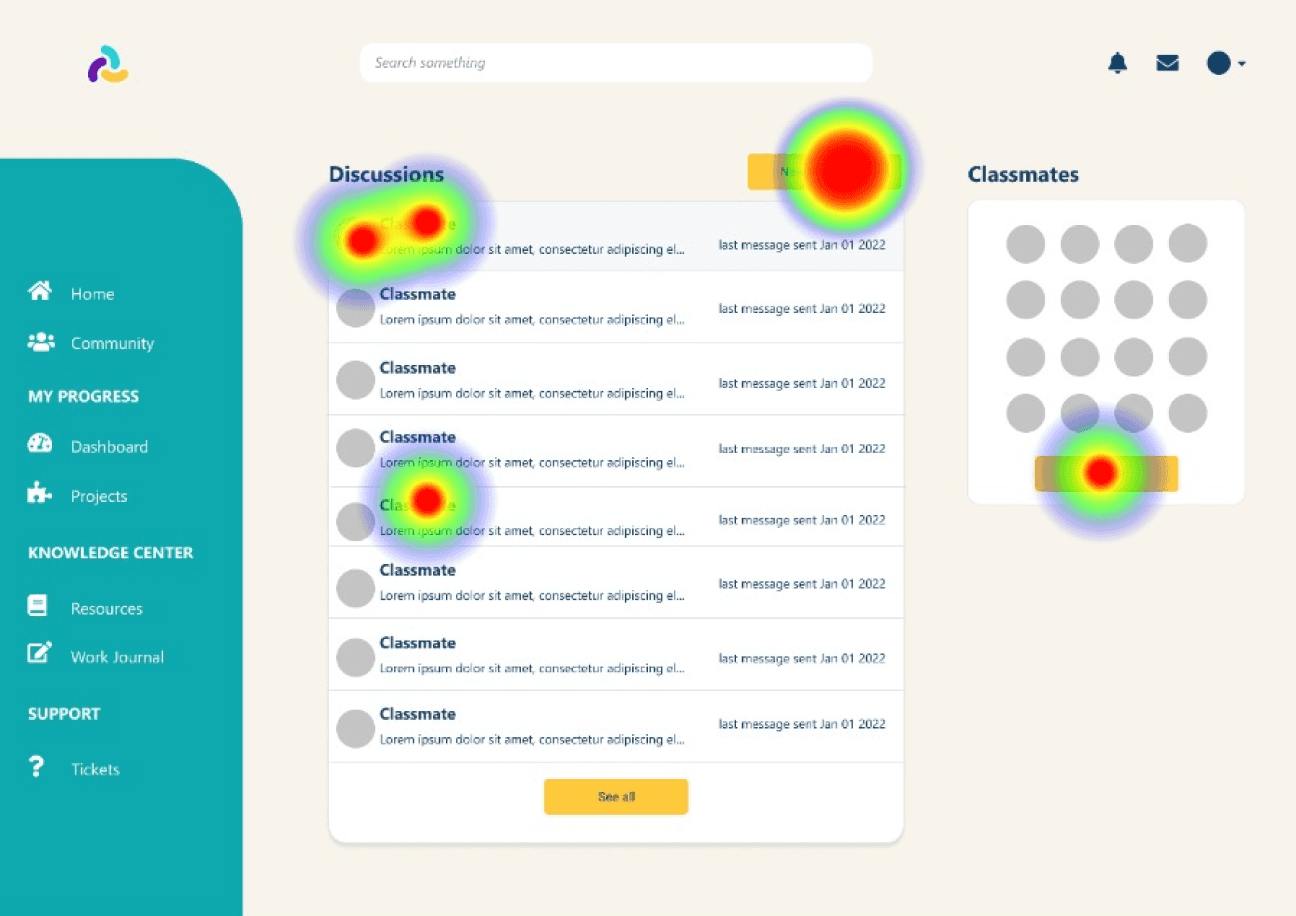
The first round used a mid-fidelity prototype tested through Maze, followed by a survey to understand the thinking behind user decisions. The second round was live remote testing on the high-fidelity prototype to get richer, more nuanced feedback.
What the first round told us
👎🏻
Community wasn't landing.
Users understood it existed but couldn't make sense of what it was for. The focus was too much on structure and not enough on content. It was redesigned before the second round.
👍🏻
Job skills were a success, but users wanted more
More detail, more context, more information about the roles they were exploring.
What the second round confirmed
👍🏻
100% of users
understood the sidebar navigation without guidance and found the dashboard easy to access.
👍🏻
88% of users
valued being able to set a personal professional goal. Knowing what skills a future employer would look for made the course feel more purposeful.
THE OUTCOME
A platform that finally matched what Rbean had always promised.
Students could see their progress, understand where they were going, and connect their course to real job opportunities, all without having to explore a platform they didn't know how to navigate.
The features that already existed but were invisible became the foundation of the redesign. No unnecessary additions, just a clearer, more connected experience built around what students actually needed.